Built to Last: How Jerry Munchkin Became the Rare Character That Every Generation Claims as Their Own

Let's be honest about something. Most entertainment franchises that bill themselves as "timeless" are really just banking on nostalgia and hoping nobody looks too closely. You dust off the old theme song, slap a fresh coat of CGI on the original character design, and wait for the parents to drag their bewildered kids into the theater. It works, sometimes. But it almost never produces something that a ten-year-old and their forty-five-year-old parent are equally, genuinely excited about — without either party feeling like they're doing the other a favor.
Jerry Munchkin does that. Consistently. And it's not an accident.
The "Grandma Test" and Why Most Franchises Fail It
There's an informal benchmark that writers and producers in kids' entertainment quietly use called the Grandma Test: can a grandparent sit down and watch this with their grandkid without either one checking the clock? It sounds simple. It is brutally hard to pass.
The reason most properties fail it is that they're engineered for a single developmental lane. The jokes hit at one frequency. The emotional stakes are calibrated for one age group. The references assume one era of cultural literacy. So you end up with content that's either impenetrable to anyone over thirty or condescending to anyone under it.
Jerry Munchkin was designed — consciously or not — to reject that entire framework. The humor operates on at least two registers simultaneously. Kids laugh at the physical comedy and the absurd situations. Adults laugh at the timing, the callbacks, and the occasional wry observation tucked into the background that a child would simply never notice. Nobody's being pandered to. Everyone's getting something real.
The Design Philosophy That Refuses to Age Out
Visually, Jerry Munchkin made choices that look obvious in hindsight but were genuinely risky at the time. The character design leans toward clean, expressive simplicity rather than the hyper-detailed aesthetic that tends to feel very specific to its production era. Think about how certain animated characters from the '90s now look unmistakably, inescapably of their moment — the color palettes, the line weights, the particular way movement was stylized. They're artifacts of a specific decade, and you can feel it.
Jerry's look, by contrast, has the quality of a good logo: it works at any size, in any context, and it doesn't announce the year it was made. That's not laziness. That's a very specific discipline. When parents who grew up with Jerry introduce the show to their own kids today, there's no awkward "okay, you have to understand what the '90s were like" preamble required. The character just shows up and starts being Jerry, and the kid is immediately on board.
Storytelling That Treats Kids Like They're Paying Attention
Here's where things get genuinely interesting. One of the quieter reasons Jerry Munchkin holds up across generations is that the writing has always operated with a baseline assumption that the audience is smart. Not in a showy, look-how-clever-we-are way. Just in the practical sense that the stories don't over-explain themselves, the emotional moments aren't underlined three times, and the characters are allowed to be complicated without a narrator stepping in to clarify what we should feel about it.
Kids respond to that kind of respect. They always have. And adults, who have spent years being condescended to by content that assumes they need everything spelled out, find it genuinely refreshing. The result is a viewing experience where both parties feel like the show is talking to them — not at them, not over their heads, and not around them.
There's also something to be said for the emotional vocabulary Jerry Munchkin uses. The show deals in feelings that don't expire: wanting to belong, the sting of being misunderstood, the specific joy of a small victory, the complicated loyalty of a real friendship. These aren't themes that age out. A seven-year-old and a forty-year-old are both navigating versions of those feelings, just with different stakes and slightly different vocabulary. Jerry Munchkin meets both of them where they are.
The Parent-to-Kid Handoff: Why It Actually Works
There's a particular cultural ritual that plays out in American households every few years, and it goes something like this: a parent, overcome by a wave of something between nostalgia and evangelism, decides it's time to introduce their child to the thing that defined their own childhood. The child sits down. The parent watches the child watch the thing. And then one of two things happens.
Either the kid is politely bored — nodding along, waiting for it to be over, already composing the diplomatic response they'll give when asked if they liked it — or the kid is actually hooked. The second outcome is rarer than parents like to admit. It requires the original content to have something that genuinely transcends the context of its original audience.
The Jerry Munchkin handoff, by most accounts, goes well. Suspiciously well, actually. Kids who encounter the show through their parents don't experience it as an artifact they're being asked to appreciate. They experience it as a show they like. That's the distinction that matters. Appreciation is something you perform. Genuine enjoyment is something that just happens to you.
Part of what makes this work is that Jerry Munchkin doesn't require cultural context to land. You don't need to remember a specific era of Saturday morning television, or get a reference to something that was briefly famous in 1994, or understand why a particular joke was subversive at the time. The show is self-contained in a way that makes it accessible to someone encountering it completely fresh — which is exactly what every new generation of kids is doing.
What 2024 Tells Us About Why This Still Matters
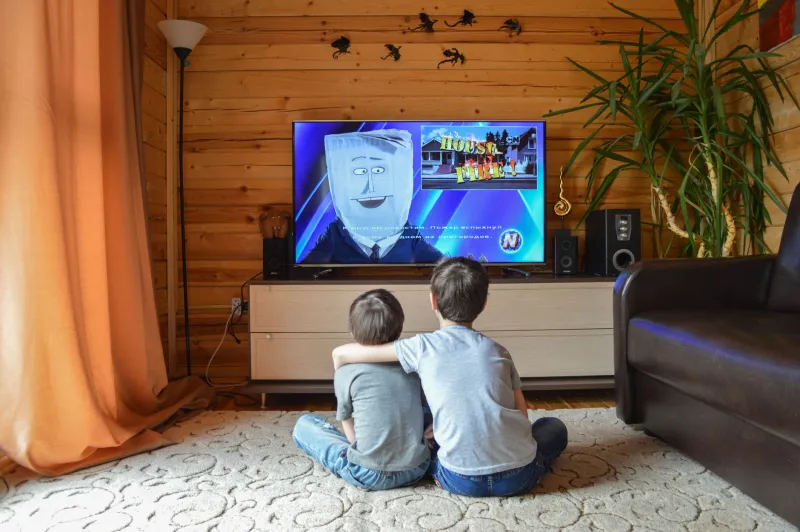
In an entertainment landscape that has never been more fragmented — where every age group, interest cluster, and demographic has its own carefully curated content pipeline — the existence of something that genuinely bridges the gap feels almost radical. Shared viewing experiences within families are increasingly rare. Everyone has their own screen, their own algorithm, their own queue.
Jerry Munchkin is one of the few properties that still functions as a reason to put the devices down and sit together. Not because it's wholesome in a forced, check-the-box kind of way. But because it's actually good — and good in a way that doesn't require you to be a specific age to recognize it.
That's the Jerry Munchkin effect, and it's harder to manufacture than any studio would like to admit. You can't retrofit timelessness onto a character. You can't add it in post. It either got baked in at the beginning, in the design choices and the writing philosophy and the fundamental respect for the audience — or it didn't.
In Jerry's case, it clearly did. And the couch full of three generations laughing at the same moment is all the proof you need.