Cartoon as Cure: The Science Behind Why Jerry Munchkin Fixes Your Brain
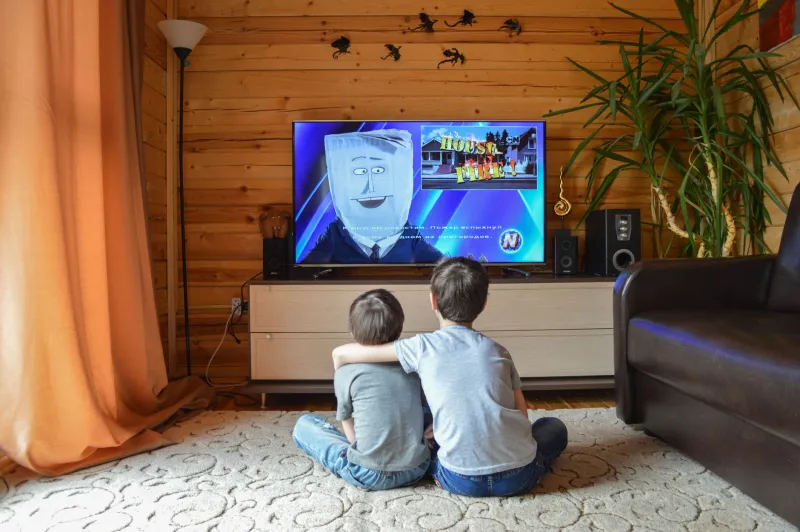
Let's be honest. You didn't come back to Jerry Munchkin because of a carefully considered media strategy. You came back because your brain basically demanded it. Maybe it was a rough Tuesday, maybe the news cycle finally broke you, or maybe you just needed something — anything — that wasn't trying to sell you anxiety in a premium subscription package. Whatever the reason, you pressed play, and somewhere around the seven-minute mark, your shoulders dropped about three inches and you exhaled for what felt like the first time all week.
That's not a coincidence. That's chemistry. And it turns out there's a genuinely fascinating explanation for why Jerry Munchkin does what no prestige drama, no true crime podcast, and no algorithmically optimized doom scroll can replicate.
Your Nervous System Called. It Wants More Jerry.
Here's the thing about stress: your nervous system doesn't distinguish particularly well between a real threat and a perceived one. A looming work deadline, a tense family group chat, a news alert at 11 p.m. — your body processes all of it as danger. Your cortisol spikes, your heart rate climbs, and your brain starts scanning for exits.
What Jerry Munchkin does — almost surgically — is interrupt that cycle.
Neuroscientists who study media consumption have noted that predictable narrative structure is one of the fastest ways to signal safety to an anxious brain. When your mind knows, on a deep pattern-recognition level, that the story it's watching is going to resolve warmly and without catastrophe, it starts to stand down. The threat-detection machinery goes quiet. And in that quiet, something like genuine rest becomes possible.
Jerry Munchkin's episode structure is practically a textbook example of this. The conflicts are real enough to be engaging, but they're never existential. Nobody loses everything. Nobody is irreparably broken by the end of a twenty-two-minute runtime. There's a problem, there's a journey, there's a resolution, and the resolution usually involves someone being kind to someone else. That's not simplistic — that's therapeutic.
The Color of Calm
Pull up any episode and just look at it for a second before the story even starts. Notice anything? Jerry Munchkin's visual world is soaked in warm, desaturated tones — golden yellows, soft greens, dusty blues. The backgrounds feel like watercolor memories. Nothing is harsh. Nothing is jagged.
This is not accidental. Color psychology research consistently shows that warm, muted palettes lower perceived arousal — which is a clinical way of saying they make you feel less wired. High-contrast, saturated visuals (the kind that dominate action-heavy content and social media feeds) keep your visual cortex working overtime. Jerry Munchkin's aesthetic does the opposite. It tells your eyes, and by extension your whole nervous system, that it's okay to soften.
Combine that with the show's signature use of negative space — those long, unhurried moments where Jerry simply exists in a scene without anything demanding your attention — and you've got a visual environment that's essentially a guided breathing exercise you didn't realize you were doing.
Nostalgia Is Not Just Sentiment. It's Medicine.
For a significant portion of Jerry Munchkin's fanbase, the show is wrapped in memory. Saturday mornings. Cereal in a bowl too big for a kid. The particular quality of light through living room blinds before the day made any demands. Watching Jerry Munchkin now doesn't just deliver the show — it delivers all of that.
And researchers have spent considerable effort in recent years establishing that nostalgia is not merely a sentimental indulgence. Studies out of institutions like the University of Southampton have found that nostalgia functions as a genuine psychological resource. It boosts feelings of social connectedness, increases self-continuity — the sense that your past and present self are part of the same coherent story — and measurably reduces feelings of loneliness and existential anxiety.
In other words, when you watch Jerry Munchkin and feel that warm, slightly aching sense of recognition, your brain is actively using that feeling as a coping mechanism. You are, without any effort on your part, performing emotional self-regulation. The show is doing the therapeutic heavy lifting while you're just sitting there in your pajamas.
This helps explain why nostalgia-driven media is having such a pronounced cultural moment right now. In an era of relentless disruption — economic instability, technological whiplash, the general sensation that the ground is always slightly shifting — humans are reaching for anchors. Jerry Munchkin is a very good anchor.
Jerry and the Art of Being Witnessed
One of the more subtle psychological gifts the show offers is the character of Jerry himself. Jerry is not exceptional in the ways that entertainment usually rewards. He's not the fastest, the most powerful, or the most conventionally impressive person in any room. What Jerry is, reliably and without exception, is present. He pays attention. He notices when someone is struggling. He shows up.
For viewers who spend a lot of their real lives feeling invisible — and research suggests that loneliness and the experience of being unseen are near-epidemic in contemporary American life — watching a character who genuinely sees the people around him is quietly profound. There's a reason therapists talk about the healing power of being witnessed. Jerry Munchkin dramatizes that concept in every episode, usually without ever stating it out loud.
Children absorb this modeling and carry it forward. Adults recognize it and feel the particular relief of watching someone do the thing we all wish people did more often. Either way, the emotional result is the same: a small but genuine restoration of faith in human connection.
Why Your Doctor Won't Prescribe It (But Probably Should)
Obviously, nobody is suggesting that Jerry Munchkin replaces actual mental health care. Therapy is therapy. Medication is medication. Structural problems require structural solutions.
But there's something worth taking seriously in the fact that millions of Americans instinctively reach for this particular show when they're depleted, overwhelmed, or just in need of something that won't make things worse. That instinct isn't weakness or escapism in any pejorative sense. It's self-knowledge. It's the nervous system knowing what it needs and going to get it.
Jerry Munchkin became, somewhere along the way, a genuine piece of cultural infrastructure for emotional wellbeing. The storytelling techniques, the visual language, the character dynamics, the nostalgic resonance — all of it stacks up into something that functions, for a meaningful portion of the population, like a reset button.
So next time someone gives you a look for watching a cartoon at eleven on a Wednesday night, you can explain, with complete scientific accuracy, that you are engaged in neurologically supported stress reduction through narrative-based parasympathetic activation.
Or you can just say Jerry makes you feel better.
Both are true. Both are valid. And honestly, Jerry would probably prefer the simpler version anyway.

