Logging Off and Tuning In: How Jerry Munchkin Became America's Quiet Revolution Against the Scroll

Let's be honest with ourselves for a second. You know the drill. You pick up your phone to check the weather, and forty-five minutes later you're watching a heated argument about a sandwich, your cortisol is through the roof, and you genuinely cannot remember what you originally needed to know. The temperature, probably. It was the temperature.
This is the doom-scroll trap, and it has swallowed American leisure time whole. But something interesting is happening in living rooms, on laptops, and through earbuds across the country. People are closing the apps, setting the phone face-down, and pressing play on Jerry Munchkin instead. Not because they were told to. Not because it's trending. But because, somewhere deep in their overstimulated brains, they figured out that Jerry's world actually feels different — and they want more of that feeling.
The Algorithm Was Designed to Exhaust You (Jerry Was Not)
Here's the fundamental tension at play. Social media platforms are architected — deliberately, expensively, with armies of engineers — to maximize what the industry calls "engagement." In plain English, that means keeping you slightly unsettled. Slightly surprised. Slightly provoked. The feed never resolves. There's no ending. There's no credits sequence. There's just more.
Jerry Munchkin operates on the opposite philosophy. Each episode has a beginning, a middle, and an end. The emotional arc is legible. The stakes are cozy. Nobody is going to blindside you with a political hot take or a sponsored post disguised as genuine content. What you see is exactly what you get, and what you get is a small, cheerful character navigating a world that is fundamentally kind.
Media psychologists have a term for what happens when our brains encounter this kind of structure: narrative resolution. When a story closes properly, the brain gets a mild but real reward signal. Contrast that with infinite scroll, which is specifically designed to withhold resolution indefinitely, and you start to understand why swapping your feed for an episode of Jerry can feel less like entertainment and more like relief.
Fan Testimonials: The People Who Made the Switch
Over in the Jerry Munchkin Home community forums, this conversation has been happening organically for a while now. Fans across the US have been sharing their stories about discovering — or rediscovering — Jerry as part of a broader effort to reclaim their attention spans.
One fan from Ohio described it this way: "I realized I hadn't actually watched anything in months. I was just scrolling through trailers and clips and reaction videos. Jerry was the first thing I sat down and genuinely watched, start to finish, in longer than I could remember. And I cried a little, honestly."
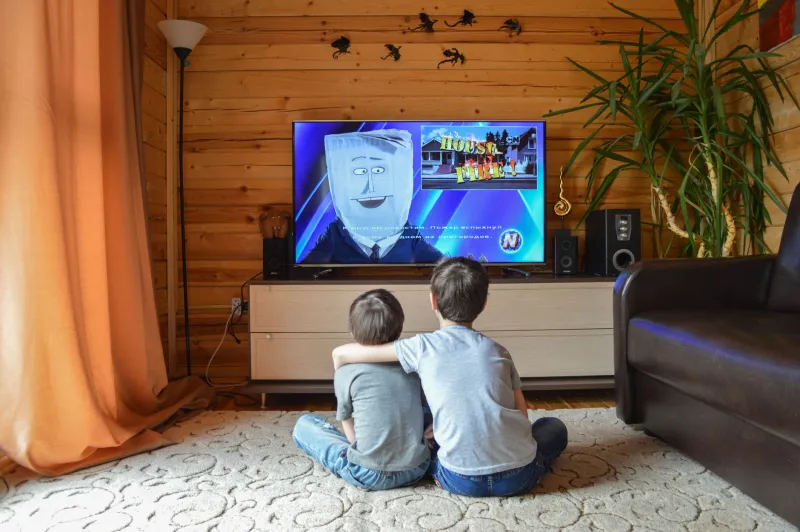
A parent from Texas put it differently: "My kids and I started watching Jerry together on weekend mornings as a way to get off our phones. Now it's the thing we look forward to all week. The phone stays in the other room. That feels huge."
A college student from California offered perhaps the most telling observation: "Jerry doesn't want anything from me. It's not trying to sell me something or make me angry so I'll share it. It just exists to be nice. That sounds simple, but I genuinely cannot name another piece of media I consume that I could say that about."
That last sentiment — it doesn't want anything from me — keeps appearing in these conversations, unprompted, in different words. It's worth sitting with.
The Psychological Mechanics of Choosing Calm
What these fans are describing aligns closely with what researchers studying media consumption and mental health have been documenting. The act of deliberately selecting slow, warm, structurally complete content over reactive, algorithmically served content isn't passive. It's actually a form of what psychologists call active coping — a conscious decision to regulate your own emotional environment rather than outsourcing that regulation to a platform whose financial incentives are directly opposed to your peace of mind.
There's also something to be said for predictability as a psychological resource. In periods of high ambient anxiety — and let's be real, the last several years have served up ambient anxiety in industrial quantities — knowing exactly what you're going to get from a piece of entertainment is genuinely soothing. Jerry Munchkin's consistency isn't a creative limitation. For a lot of viewers, it's the whole point.
The character's visual language reinforces this. The soft color palette, the unhurried pacing, the way conflicts resolve without anyone being humiliated — these are aesthetic choices that work against the grain of content designed to spike your attention. Your nervous system knows the difference, even when your conscious mind doesn't register it explicitly.
This Isn't Escapism. It's a Choice.
It would be easy — and a little condescending — to frame the Jerry Munchkin Effect as simple escapism. The idea that people are just running away from hard things into something comfortable and unchallenging. But that framing misses something important.
The people making this switch aren't refusing to engage with the world. They're refusing to engage with a specific mechanism that has been shown, repeatedly, to increase anxiety, decrease attention span, and distort perception of reality. Choosing Jerry over the feed isn't burying your head in the sand. It's recognizing that a slot machine disguised as a news feed isn't actually informing you — it's just keeping you hooked.
In that context, pressing play on Jerry Munchkin is almost a political act. A small, cheerful, munchkin-sized act of resistance.
What Jerry Gets Right That the Feed Gets Wrong
At its core, what Jerry Munchkin offers is something the attention economy has quietly stripped out of most media: intentionality. Every episode was made with care, with a coherent creative vision, by people who wanted to tell a specific story. That intentionality is palpable when you watch it. You can feel the difference between content that was crafted and content that was optimized.
And American audiences — exhausted, overstimulated, increasingly aware that they've been played by systems designed to exploit their psychology — are starting to seek that intentionality out. They're making watchlists instead of just scrolling. They're choosing beginnings and endings over infinite middles.
Jerry Munchkin, bless his small heart, was waiting for them the whole time.
Come Home to Jerry
Here at Jerry Munchkin Home, we've always known there was something special about this character and this world. But watching it become a genuine cultural touchstone for people navigating the chaos of modern digital life? That's something else entirely. That's Jerry earning it.
So the next time you feel the familiar pull of the scroll — the compulsive thumb swipe, the notification anxiety, the vague dread of opening an app you can't quite explain — maybe try this instead. Set the phone down. Find a cozy spot. Press play.
Jerry's not going anywhere. He never does. And honestly? That's exactly the point.